Maitreyee Bhattacharjee Chowdhury লেবেলটি সহ পোস্টগুলি দেখানো হচ্ছে৷ সকল পোস্ট দেখান

মঙ্গলবার, ৪ জুন, ২০১৯

The Hungryalist Movement : Shikha Kumar

The Age of Dissent

Shikha Kumar

How the Hungry Movement of Bengal in the 60s mirrored the Beat Generation
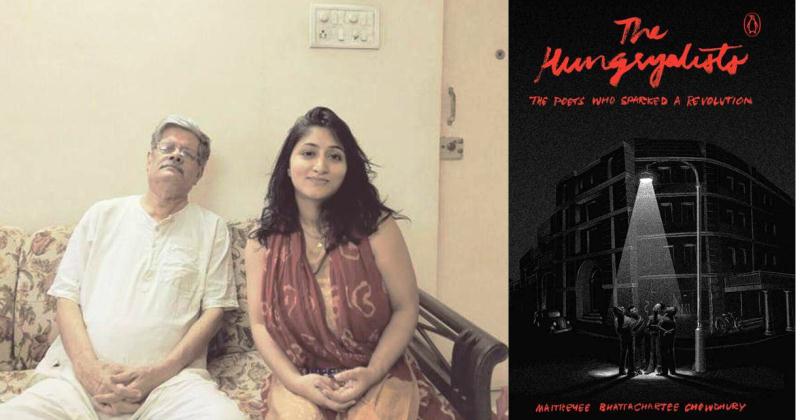
The Hungryalists: The Poets Who Sparked a Revolution | Maitreyee Bhattacharjee Chowdhury | Viking | 187 Pages | Rs 599
‘RARELY HAVE POETRY movements around the world impacted generations of writers, intellectuals and thinkers in the way these two movements have. In that sense, it is also the narrative of an entire generation,’ writes Maitreyee Bhattacharjee Chowdhury in the introduction to The Hungryalists, referring to America’s Beat Generation and India’s Hungry Movement.
The Hungryalists were born on a rainy night in Patna in 1961. Formed by brothers Malay and Samir Roy Choudhury, Shakti Chatterjee and Haradhan Dhara (a Dalit writer who went by his adopted name Debi Rai), the movement was joined by other poets and artists subsequently, sparking a sociocultural revolution of sorts in postcolonial Bengal. Against the backdrop of rising unemployment, political unrest and migration from East Pakistan, the Hungryalists’ poetry rejected the literary aristocracy of Calcutta.
Chowdhury follows the narrative non-fiction format to recreate the generation’s chronicles in the 60s, their stories culled from personal interviews, memoirs, journals and other books. She also gives plenty of political and historical context to establish how the Hungryalists’ works unshackled readers’ perceptions of what literature was.
‘For the Western-educated bhadralok Bengali of Calcutta, the very presence of the refugees was a scar on their private and intellectual landscape and reason enough to feel ruffled. An entire generation of Dalits suddenly became ‘refugees’, or the refugees became the new Dalit,’ she writes.
The Hungry bulletin began being published from Haradhan’s tiny room in a slum in Calcutta. Its first manifesto had his adopted name as editor, and his slum address for official correspondence, in what was ‘a deliberate move to offend the conservative elite custodians of culture’.
There’s also a parallel narrative of Allen Ginsberg’s travels in India with his long-term partner and fellow poet Peter Orlovsky in the 60s. A proponent of the Beat Generation, Ginsberg—like many Americans looking to escape the traps of a consumerist lifestyle—found himself lured by the spiritualism that surrounded India. He spent significant time with the Hungry poets in Patna, Varanasi and Calcutta.
As their popularity grew, members of the Hungry group also started their own magazines, encouraging younger voices. The bulletin became more inclusive too—two of the members, Subimal and Rajkamal, published a trilingual (Bangla, Hindi, English) edition. Apart from critiquing politics and religion, the ‘Bhookhi Peedhi’ soon became infamous for their poetry celebrating the sensuous, at a time when the expression of physical desires was considered taboo in literature: ‘They introduced the idea that obscenity was a social and artificial construct, created by class-conscious people.’
In May 1964, a 16-page Hungry manifesto included a poem by Malay, titled ‘Prachanda Baidyutik Chhutar’ (translated into English as ‘Stark Electric Jesus’) and addressed to a fictional lover. The poem, with its raw emotion and overt references to sex, created a stir. By September, arrest warrants had been issued against 11 of the Hungry poets, including Malay, Samir and Debi.
The Hungryalists got international attention when Time featured their revolution. More coverage from Latin America, Europe, Australia and the US followed. But the movement’s gusto started dwindling after the arrests—their morale was broken and Malay came to realise that ‘a revolution was pointless when betrayal came from deep within’. Shakti had left the group a few years earlier, and testified against them in court. Malay was acquitted in 1967, and there were many failed attempts to regroup in the years after.
With the Naxal uprisings, the state government began taking extreme steps to rein in the rebellious. While the Hungryalist Movement ended, most of the poets never stopped writing or editing until their death.

শনিবার, ১৩ এপ্রিল, ২০১৯

"The Hungryalists" " Maitreyee B Chowdhury interviewed


‘Thankfully, Bengalis do have a sense of humour’ : Maitreyee Bhattacharjee Chowdhury


Maitreyee Bhattacharjee Chowdhury is a Bengaluru based poet and writer. She has three books to her credit – ‘Uttam Kumar and Suchitra Sen: Bengali Cinema’s First Couple’ (non fiction), ‘Where Even the Present is Ancient: Benaras’ (poetry) and ‘The Hungryalists’ (non fiction).
In the year 2013, ‘Uttam Kumar and Suchitra Sen: Bengali Cinema’s First Couple’ was nominated for Crossword Book Awards in 2013. Maitreyee is organiser of Bengaluru Poetry Festival, and poetry and fiction editor of The Bangalore Review, a literary journal. Maitreyee’s writings can be found in journals both national and international. She lives in a house with a family of dogs and poetry.
In an exclusive interview with Bengaluru Review, Maitreyee shares her experiences with writing her latest book, ‘The Hungryalists’, which chronicles a poetic revolution in Bengal during the ‘60s.

Let’s start on a lighter note. In the Preface (Introduction) to the book, you mention that some poetic licence has been taken with the romantic angle in Malay’s (Roy Choudhury) life in the interest of the book being in the format of narrative non-fiction. How much or to what degree that poetic licence has been taken, and was it done from the viewpoint that a non-fiction title can generally be taxing keeping in mind the general readership or that amidst the chaos, the commotion of the Hungryalist movement, this aspect of the narrative would bring some sense of calm to the storytelling?
The form of narrative non-fiction allows some creative license in the presentation of the narrative. In an attempt to make the book more interesting, I used some of this creative licence in the description of Malay’s love interests. I wanted the characters to be alive for the audiences for which details about them had to be understood from intuition from the description given to me by Malay and others. There were no photographs or detailed descriptions that I could fall back on while describing the characters, hence how Naseem Appa bent over Malay while making love to him or Tara’s interest in travel was up to me to describe. The letters between Malay and Tara are also part of that creative licence used to highlight the nature of their relationship.
The degree of poetic license in the book is in its presentation. The framework of the story and its many nuances, events, anecdotes, letters between the Hungryalists themselves and the other characters like Allen Ginsberg are all factual.
Amongst the initial members who formed the Hungry generation, Malay is still alive. You’ve interviewed him several times as you were writing the book. Tell us something about him, his temperament as a poet, his philosophy as an artist, something which might not be known from any book(s)?

Malay was extremely helpful and warm throughout the journey of this book. He extended every possible help to me and the book would have been impossible without his generosity. I haven’t seen him in the act of writing, but I found him extremely aware of the poetry scene both in Bangla as well as English. What many might not know is that he is extremely sharp even at his age, prolific as a reader and very internet savvy – something that is rare for people his age.
In Chapter 1, it is mentioned that Haradhan Dhara, one of the keys members of the Hungry generation had adopted the name Debi Rai, and the same was printed in the first printed Hungry manifesto because he was a Dalit writer living in the slums. What do you have to say about issues like these in context to our present times? How difficult is it still to get published especially by a big brand for an upcoming writer who hails from such a background?
I don’t think the caste of a writer matters today, at least I haven’t seen or felt any such thing in the world of Indian English writing. In fact writers belonging to such castes, who might have something different to say or add to the regular narrative probably stand a far better chance of being published today. But today the issues that affect the Indian English writer are somewhat different. There are open discussions on social media amongst writers about class barriers amongst other things.
Having said that I’m not very familiar with the scene in vernacular writing, hence can’t comment on that.
To quote a couple of lines from Chapter 5, “Bengalis are anyway a timid race, and when attacked physically, the intellect in them is puzzled about the necessity of action.” Your comments?
No book is complete without something of the author or his/her observations creeping in. In this case the observation is laced with a sense of humour. Like every other race I’m allowed to criticise my brethren and myself. Thankfully Bengalis do have a sense of humour and I hope they’ll take these observations in the right spirit.
In the book, Malay is quoted casually saying, “If poetry did not show the way, what else would?” In the context of our current establishments and state of affairs, how much or how much do you not agree with this?
In every age, poetry has shown the way. This stands true for the present circumstances too. Contrary to what publishers keep telling us about poetry not being popular, I see more and more people turning to poetry. It is solace, direction giver and home for the lost soul.
Let’s talk about Ginsberg (Allen). It seems that he as a literary figure along with his chronicles during the ’60s in India served as big a role as probably, let’s say, letters from Malay’s love interest to string the narrative of this book together. Your comments on that?
The role played by Allen Ginsberg in this story cannot be wished away by anyone. He plays a rather large role in highlighting the cause of the Hungryalists to the Western media and literati. I wish to set this record straight once and for all here to all the fans of the Hungryalists too, Ginsberg’s role as far as the Hungryalists are concerned is one of generosity and camaraderie. Acknowledging that role does not take away from the Hungryalists their fame, innovation and spirit. Success sometimes lies in taking everyone along.
In a broader perspective, what do you think have been the outcomes of anti-establishment movements in poetry and literature like these, the A-Kavita movement in Hindi literature and of course, the Hungryalist movement in Bengali, both of which drew inspiration from Beat poetry and its generation?  
I think the biggest contribution of any of these movements whether in India or outside is to show to people what can be possible with literature, how it can be moulded to give rise to new language, diction and emotion and gain new territory.
It is the nature of all creative art to find the new, to add perspective to what has already been said and to evolve- in that sense and more literature has only gained from these movements.
If you were asked to define what poetry means to you in a single word, what would it be?
Two words. Soul Connect.
Malay Roychoudhury with Maitreyee Bhattacharya Choudhury (Source : Hungry Generation)

শনিবার, ২৩ মার্চ, ২০১৯

The Hungryalists - an excerpt ( Published by Penguin Random House )

A new book chronicles the radically iconoclastic movement in Bengali poetry in the 1960s

Maitreyee Bhattacharjee Chowdhury’s ‘The Hungryalists’ portrays a group of literary revolutionaries in Bengal.

In October 1962, young poet Malay Roy Choudhury boarded the newly launched Janata Express at Patna. The train would stop in Delhi before it reached Calcutta – a rather tedious journey that would go on for over two days. Malay hoped Calcutta would be pleasant this time of the year. His elder brother, Samir, had written to him just before he had left for Calcutta.

You’ll reach just in time to see the city being decorated for Durga Puja. Ma arrives in the most beautiful colours and people make the most creative podiums for her to be worshipped in. The kash phool would have spread its abundance. You’ll find them everywhere if you care to look, spread out sleepily in the emptiness outside the city. The sound of dhak will be everywhere and if you’re lucky, you’ll find some of the dhakis at the Howrah station when you arrive.


Malay wondered if Calcutta had changed Samir. Patna was dry and without a trace of chill. The narrow seats and the stale air that greeted him in the third-class compartment were terrifying. He was carrying two small bags, his underwear peeking out of one, some papers and a few packets of crisps from the other. It was still early evening, with reluctant bogies standing around idly, basking in a gentle sun. It was Malay’s first trip to Calcutta after the establishment of the Hungry Generation.

Before the year would end, Malay would meet American poet Allen Ginsberg in Calcutta.

It was February 1961 when Ginsberg landed in Bombay (now Mumbai). The Cold War was still on, a nuclear face-off had just been averted in Cuba and Delhi was at loggerheads with Peking – a border dispute had pushed the two countries to the brink of war. And just like everywhere else, poets, writers and thinkers in India were had been affected too.

Ginsberg visited many places in the country, including Benaras (now Varanasi), Patna, the Himalayan foothills and Calcutta (now Kolkata). During his trip, he spent most of his time mingling with like-minded poets, musicians and artists, and even wrote about them in great detail in Indian Journals. In Calcutta, between keeping company with Ashok Fakir in “Ganja Park” – an area near the main road stretching from Chowringhee to Rashbehari Avenue – and hallucinating at Kali’s feet while lying in her temples, Ginsberg would walk around the city or watch bodies being burned in the ghats.
To the ever-sceptical Bengali, he might have seemed like another disillusioned westerner doing the rounds of holy Indian cities, in search of drugs, sex and a vague notion of exotic spirituality. But Ginsberg was all that and more. As it turned out, not many Indians at that time were aware of Ginsberg’s reputation or the influence he wielded back home.

Ginsberg, of course, had read Howl, his legendary poem, at Six Gallery in San Francisco by then, and had begun shaping the American approach and reaction to poetry. What effect his presence would have on the poets in Calcutta, or they on him, time would tell vividly. But for now, he was one of them – a poet and a wanderer, who carried with him a turbulent and disturbed past, with the belief that here, of all places, he would be accepted no matter how dirty or disillusioned he was.

The train now moved slowly, egged on as if by a reluctant inertia. Malay remembered what Samir had written to him from Calcutta while he was in Patna.

He had been angry with their father for sending him away to Calcutta after school. The Roy Choudhurys had decided to shift from Imlitala, a neighbourhood in Patna, which their father considered exerted a bad influence on the boys. Pretty early on in life, the place had exposed them to free sex, toddy, ganja, and much more. Their father had built a new house in Dariapur and the family had shifted there. Subsequently, when Samir was sent to Calcutta, it was a double blow for him and one that didn’t go down very well. Calcutta was a place he knew almost nothing about. His instructions to Malay had been clear – he was going to live vicariously through his brother in Patna. On certain days, Samir would almost be pleading with Malay in his letters.
Dear Malay,
Near the charali next to our house is a woman who sells bidis for two annas. Buy a packet from her, hide it in your trunk and bring it for me when you’re in Calcutta. Remember, nobody should know about this.
Dada
And another about a month later read:
Dear Malay,
Apparently, there are many things to do here, but I don’t know where to start. I have made a few friends; we meet at the Coffee House regularly. Deepak [Majumdar], Ananda [Bagchi] and Sunil [Ganguly] are close to me. Sometimes we discuss kobita [poetry], at other times, it is the state of affairs. Everyone is angry here; there are strange people I meet on the road. They are not like the poor of Imlitala; they have a lost look about them. They don’t look or feel poor when you talk to them – all you can understand is death on the inside. I think they have lost a dream. It makes me feel horrible; I miss the easy poverty of Imlitala...You must go to Bade Miyan’s paan shop at the end of our lane and tell him about the paan that I used to have, he will know. You could have one yourself, but I fear it might not be good for you. You must bring one for me though. It will cost you one anna.
Dada

Malay could not understand from Samir’s letters whether he was happy in Calcutta or not.

But he sensed some anger. He seemed like a revolutionary without an understanding of what his revolt was about. Malay wished Samir knew how much he wanted to see Calcutta – the city he had spoken so much about in his letters. He greatly desired to visit the city where poetry was read aloud on the streets; where a Shankha Ghosh, even at the height of his literary career, could be approached by college students; where Shakti Chatterjee would recite poetry on the stairs of the Coffee House. Samir’s shift to Calcutta indirectly helped Malay in many ways.

It was Ashadh of 1952 when Malay next received a letter from Samir. It had been raining for two days and the blue inland envelope got a bit wet as Malay fetched it from the letterbox. Unlike his previous letters, Samir sounded excited in this one – it was the first time he had forgotten to mention Imlitala.
Dear Malay,
Last evening, Sunil, Shakti and Deepak came home. My room is small, and the bed has too many books on it for me to move them. We sat on the terrace adjoining my chilekotha [an attic-like room]. While it didn’t matter to either Sunil or Deepak, I was glad I had the small mat Ma had insisted I bring from Patna. Tha’mma doesn’t stir out of her room after dusk, so it was OK for Sunil to bring his smoke. Thanks to the gondhoraj lebu plant that is full of flowers and small bulbs of lemons, the smell of smoke was confined to the terrace. We talked for a long time; thankfully, none of them were in a hurry. Tha’mma might ask a lot of questions tomorrow though. Sunil is full of ideas; he says he wants to start a magazine. He is still not sure how to go about it though, but he says he is bored of reading the same kind of writing. I told him what you and I have talked about so many times. He seemed a bit surprised at first, and then asked me about you. Deepak was quiet all evening, but he sang a song later. Kaka came up to meet us. Later, he and Deepak talked about Hindi film heroines. Their discussion made Shakti and me laugh a lot. There was not much to eat, but Sunil had bought some pakoras on the way; we ate them and, later, licked the plate clean. Sunil went through my books and wanted the Swinburne collection. I can give it to him only later, which is what I told him. I hope he didn’t take offence though.
More later,
Dada
Maitreyee Bhattacharjee Chowdhury

Many of the new writers were Samir’s classmates in City College. There were other established ones, who frequented the Coffee House, whom Samir had befriended and would discuss literature with.

Shakti and Sunil came up quite often; they were close friends, who had been to his family home in Uttorpara a few times. Sunil was a prolific and acclaimed novelist, but poetry was his first love. In fact, Samir, who’d recognised his talent early on, went on to fund and publish Sunil’s first book of poems, Eka Ebong Koyekjon. 

Samir would have intense discussions with Deepak, Sunil and Shakti on many an evening on the kind of literature they had all grown up with and began to believe in. Subsequently, he got deeply involved with Sunil in establishing Krittibash – a journal that launched many a Bengali poet that time. Deepak, Ananda and Shakti were also compatriots in this venture. Krittibash found “its voice’” in 1953. Samir always kept his brother in the loop about everything, and Malay would occasionally receive large paper packets containing literary periodicals and books of poetry. 

Now as the train moved towards Calcutta, Malay felt as if his life was coming full circle. It had been a strange decision to visit the city at a time when post-Partition vomit and excreta was splattered on Calcutta streets. Marked by communal violence, anger and unemployment, the streets smelled of hunger and disillusionment. Riots were still going on. The wound of a land divided lingered, refugees from East Pakistan (now Bangladesh) continued to arrive in droves. And since they did not know where to go, they occupied the pavements, laced the streets with their questions, frustrations and a deep need to be recognised as more than an inconvenient presence on tree-lined avenues.

The feeling of being uprooted was everywhere. Political leaders decided that the second phase of the five-year planning needed to see the growth of heavy industries. The land required for such industries necessitated the evacuation of farmers. Devoid of their ancestral land and in the absence of a proper rehabilitation plan, those evicted wandered aimlessly around the cities—refugees by another name.
Calcutta had assumed different dimensions in Malay’s mind. The smell of the Hooghly wafted across Victoria Memorial and settled like an unwanted cow on its lawns. Unsung symphonies spilled out of St Paul’s Cathedral on lonely nights; white gulls swooped in on grey afternoons and looked startling against the backdrop of the rain-swept edifice. In a few years, Naxalbari would become a reality, but not yet. Like an infant Kali with bohemian fantasies, Calcutta and its literature sprouted a new tongue – that of the Hungry Generation. Malay, like Samir and many others, found himself at the helm of this madness, and poetry seemed to lick his body and soul in strange colours. As a reassurance of such a huge leap of faith, Shakti had written to Samir:
Bondhu Samir,
We had begun by speaking of an undying love for literature, when we suddenly found ourselves in a dream. A dream that is bigger than us, and one that will exist in its capacity of right and wrong and beyond that of our small worlds.
Bhalobasha juriye
Shakti
Excerpted with permission from The Hungryalists: The Poets Who Sparked A Revolution, Maitreyee Bhattacharjee Chowdhury, Penguin Books.

শনিবার, ১৬ মার্চ, ২০১৯

Maitreyee B Chowdhury talks to Torsa Ghosal about her book "The Hungryalists"

The hungry and the restless

Torsa Ghosal

Outside the lines: Refugees from erstwhile East Pakistan flee the 1971 war. Binoy Majumdar, a prominent member of the Hungryalists, was also a refugee who was often overlooked by the literary establishment in Bengal   -  THE HINDU ARCHIVES

A new book chronicles the Hungryalist poets, who revitalised Bengali literature during the turbulent 1960s

 
Maitreyee Bhattacharjee Chowdhury’s The Hungryalists: The Poets Who Sparked A Revolution offers a compelling portrait of poets such as Malay Roy Choudhury, Shakti Chattopadhyay, Samir Roychoudhury, Haradhan Dhara and Binoy Majumdar, who initiated the “Hungry Movement” to revitalise Bengali literature during the 1960s.

It was a turbulent period marked by the influx of refugees from East Bengal, the Indo-China War, the Vietnam war, and the Naxalite uprising. The Hungry Generation of poets responded to the on-going national and international turmoil, though as a group they were never quite a cohesive entity. Chattopadhyay, for instance, left the group in the mid-sixties.

Around the same time, Roy Choudhury and Dhara, along with several other Hungryalists, were held for writing “obscene” poetry. Chattopadhyay accepted a Sahitya Akademi Award in 1983. Roy Choudhury was conferred the same honour in 2003 but he refused to accept it.
Given their anti-establishment sensibilities, the Hungryalists had befriended the iconic post-war American poets, the Beats, including Allen Ginsberg and Peter Orlovsky, who were touring India at the time. The most striking feature of The Hungryalists is that though it records this significant chapter of literary history, it does so by tracing the rich internal lives of the poets — their motivations, dreams, and disappointments.

Excerpts from an interview with the author:
What drew you to the Hungry Generation?
About four years ago I read Deborah Baker’s book A Blue Hand: The Beats in India, where I found a fleeting mention of the Hungryalists. Like me, many in Bengal had heard of the Hungry Andolan and read them in Bangla but no substantial work had been done on them in English. This was when I began my research on them.

Early into the writing, I felt that narrating their dreams and disappointments was necessary because poetry wasn’t only a way of life; for them, it was life.

Since you are a poet, was it challenging for you to focus on the poets’ biographies rather than on their poetry?
As a poet and non-fiction writer, this was in fact the perfect combination. Being a poet probably made me understand their choices in life and revolt better. The Hungryalists’ fight was against elitism, casteism and authoritarianism. The sixties were a time during which any kind of sensuality in poetry or other writing was looked down upon. Buddhadeb Bose’s book Raat Bhor Brishti which released around this time was banned, copies were burnt and he was put on trial standing in a wired cage. While such a response might have been shocking in the’60s, these subjects resonate with writers such as myself too.

Why made you draw parallels between the Beats and the Hungryalists?
There have been too many comparisons between the Beats and the Hungryalists, as a result of which the Hungryalists are somewhat defensive about acknowledging the influence of the Beats. The fact remains, however, that the two groups shared a tremendous love for a new kind of poetry which joined them at the hip, in a manner of speaking. Also, the Hungryalists did mingle with the Beats, read their work, and accepted their help when necessary. While the parallels make for a great narrative and situate the Hungryalists’ revolt in an international context, there is also no doubt that the Hungryalists were poor Bengali writers with no great financial support, which is why their rebellion against elitism, classism, casteism and negation of sensuality in literature was crushed so easily.

The Hungryalists identified as outsiders, and you consider their condition as analogous to those of the refugees from East Bengal and Dalits. Could you elaborate on the analogies?
The Hungryalists came about because some of them, such as Haradhan Dhara, were Dalit writers ignored by the literati, others like Binoy Majumdar were refugees and still others like Malay were probasi Bengali writers — they were already social misfits. Coming together as a group was the only way they would get any attention of the so-called ‘cultured society’.

The Hungryalists understood the consequences of shunning mainstream dictums and had, in many ways, begun feeling the heat of being socially shunned. They formally named themselves, inspired by Geoffrey Chaucer’s line, “In the sowre hungry tyme”. But they were, perhaps, unprepared for facing legal consequences. But they were, perhaps, unprepared for facing legal consequences.

While researching how the Hungryalists were tried for writing “obscene” poetry, did you feel an event like that would pan out any differently today?
While writing about sexuality might be more acceptable today than it was in the ’60s, people are still wary of reading or reacting to anything outside their comfort zone. As far as tolerating another’s thought process is concerned, I feel people are still not as accepting. Where poetry and poets are concerned, I feel that people had more love for poets and poetry before. There was a certain sense of awe associated with poets because they presented the world from an altogether different perspective. The fact that Malay had been arrested created a huge stir internationally, but when poet Binoy Majumdar died in poverty and mental trauma in 2006, how many people were aware of it?
The need for deep poetic introspection seems mostly lost, the realm of subtlety no longer exists, and though poetry is still popular, the magic of finding value in something that doesn’t have much monetary consequence is redundant.

Torsa Ghosal is the author of Open Couplets, and professor of English at California State University, Sacramento
 
Published on March 15, 2019
 

রবিবার, ১০ ফেব্রুয়ারি, ২০১৯

"The Hungryalists" reviewed by Madhavi S Mahadevan in The New Indian Express


The Hungryalists: The Poets Who Sparked a Revolution
By: Maitreyee Bhattacharjee Chowdhury
Publisher: Penguin Viking
Pages: 272; Price: `599

Oh, I’ll die! I’ll die! I’ll die!
My skin is in blazing furore
I do not know what I’ll do, where I’ll go, Oh I’m sick
I’ll kick all Arts in the butt and go away, Shubha.

Thus begins Malay Roy Choudhury’s Bengali poem Prachanda Boidyutik Chhutar (Stark Electric Jesus). Appearing in a pamphlet in 1964, its publication resulted in arrest warrants being issued against the poet and 11 others, members of a Kolkata-based poets’ collective—the Hungry Generation. And the charges? Conspiracy against the state and literary obscenity.

Who were these radicals, where did they come from and what happened to them is the substance of Maitreyee Bhattacharjee Chowdhury’s non-fiction book, The Hungryalists: The Poets Who Sparked a Revolution. Well-researched, it draws on  journals, memoirs,  photographs, interviews and personal conversations with brothers Malay and Samir, part of  movement’s founding quartet (the other two being Shakti Chatterjee and the Dalit poet Haradhan Dhara aka Debi Roy). 
Following a loose timeline, the author dispenses with the notion of unity: anecdotes, sketches and generalisations abound, sometimes befuddling the reader by their randomness. However, the mood music of the age—intense, rebellious, raucous—comes through clearly.

Though homegrown, the Hungryalists were part of a global wave of insurrectionist poetry that had earlier seen the rise of Beatdom in the United States. Calling the Beats and the Hungryalists ‘co-travellers’, the author writes, ‘These poets/ writers rejected standards of literature, introduced new societal norms, shunned mercenaries of culture and even spawned a new drug subculture’. Solidarity between the movements was enabled when prominent Beat poets such as Gary Snyder and his wife Joanne Kyger, Allen ‘Howl’ Ginsberg and his lover Peter Orlovsky travelled to India and associated with the Hungryalists.
Though the two movements had similarities as sociocultural forces, the book elucidates the completely different circumstances that fashioned the Hungryalists’ poetics. The post-Partition decade of the 50s saw rapid changes in Bengali society: a flood of refugees, homelessness, food shortages, rising unemployment, the stench and anger of rampant poverty. It was an all-encompassing rootlessness unrepresented in the prosaic literary writing of the period—what Malay Roy Choudhury called ‘the blankety-blank school of modern poetry’. 

The Hungryalists wanted more: a new lexis, a new literary space, a wider audience. Above all, a shake-up. Their agenda was to ‘introduce chaos and a disintegration in writing that rendered it conventionally meaningless, and take advantage of the shock it created, thereby introducing the ideas they wanted to talk about’. Raw emotions needed raw language: obscenity became a moral weapon. Viewing poetry as an oral tradition, they held public readings in Howrah railway station, College Street Coffee House, Khalasitola bar and the grave of the long-dead Michael Madhusudan Dutt—whom the Hungryalists idolised. 

Co-authorship and collaboration being a feature of their identity, they met regularly at ‘addas’. Another commonality was penury: public loos, empty offices and renting space on terraces with other homeless formed their sleeping arrangements. Despite their travails they persisted with their poetry. The literati were unamused; repercussions followed in the form of police raids, handcuffs, a trial and betrayals. Nevertheless, the subaltern had found a voice that has lasted. While the Beats are well-documented, the Hungryalists are not. This book is a worthy attempt to fill the gap.

শনিবার, ৯ ফেব্রুয়ারি, ২০১৯

Malay Roychoudhury's Poetry of Dissent : Translated by Mahashweta Bose ; finalised by author


Nay-Ballad

From uncoiled wings of the burning swan
after sea of blood was born out of green caterpillar
that skin sheared moon from cloud’s underbelly
ordered  waves to abolish horoscopes on crabs’ breasts
.
On the evergreen epiglotis of lotus full to the brim
the pollen fiddling honey bee waved  her double scarf
searched for drunk village of pride red beating crowd
humming songs sleeping side by side of worried distance
.
( Translation of ‘Na-Ballad’. Written on 15 August 1999 )

A Quasi Governmental Report

Unarmed military  offered prayers
One tin water is for ten rupees
.
Underground river cut off from source
Habitually disgusted because of envy
.
Strong words used for sealing border
Public Works Department has broken
.
Since at the day’s end in share market
A woman’s body cut in two with sickle
.
Postal ballot in hand amid tomato field
Lying pristine with great expectations
.
Ambitious pair of shoes for parliament
Let them say whatever  face betray
.
As if  rice field is scared of Tiger’s roar
Daughter of cultivator is in ministry
.
Tired cuckoo-man grieving  due to son’s death
From football field corner in direct shot
.
Solved the problem of freedom movement
On the forehead of dead that was the truth
.
( Translation of ‘Ekti Adha-Sarkari Protibedan’. Written in 1996 )

Sonpur Fair, Evening of Gumrahi Tart

Sliding jute curtain
flickers in tent lantern
dot beauty gait her
small coins in betel  box
was counting tobacco scent
in broken wine glasses
.
half naked on rope cot
coin colour  country liquor
leather shoes well oiled
beat stick resting at corner
and yellow stain turban
cheese-penis landlord
.
atoned in elephant shit
put red petticoat on shoulder
switched song amplifier
hemp torn milk wet
eye on eye sharp dark
depends on who is beneath
.
myrobalan under tongue
betel nut cutter in waist
box full of scent tobacco
corset on blown breast
strung undies on string
one suck tumbling tart
.
artificial hair on bamboo pole
hypnotized hornet-man
mosquito on naked bum
his thighs are of mafioso
one and five coins for police
she is whatever fair or pure
.
( Translation of ‘Shonpur Mela, Gumrahi Baier Sandhya’ L

Ruffian

I who am a swapping lapwing’s bullet ridden sky
was born out of drowned water filled bison’s horn
in idle-eye noon beneath the pearly neem tree
was enjoying black blonde’s adornment of soft-paw brows
in rain drenched gold-flower tucked in coiffure’s knot
.
I who am standing in front of grilled horizon of meadow-dawn
on the trampled foot-printed grass of mourning sun’s wet-earth
heard nightlong wood mite’s  buzz in my last wallowed bed
thought why should purposefulness  be bad my dear
is not there art of  sweat-salt in labour of post a chair holds
.
I who asked  gallinules what taste do you get from  wings of butterflies
like  chipko playing bride of thrice-wed groom’s hoof-sound headgear
am in a ship evading  lighthouse’s beam a saw-teeth shark
in the Secretariat cage-lift with a clerk having breasts of Jamini Roy painting
bawled shrieks of rider throwing stallion’s bridle snapping neigh
.
I who am a whispering song sung in cricket’s musical notation
have trapped Hilsa fish shoals’ colours in vagina shaped nets
beneath the fig tree of hanged martyrs during freedom movement
from corners of caterpillar-chewed  perfumed lemon leaves
flying out in sky from  nape shaved hillock of stone chip proprietor

( Translation of ‘Tapori’. Written on March 1, 1990 )

Crematorium, 1992

During a paddy husk flying noon, from the corpse of a white-owl, gnat children
were stealing butter
with their hands having fragrance of rice crispies
picked up lightly the throttled shrieks of last akanda flowers
in the brittle breeze of Jaisalmer
sickly happy
at the spiraling city, blood drenched minute hand of wall clock
and the faces were beaming in wood fire warmth
pigeons fluttered making sounds of torn documents, just a bit
of living one’s own life
from those colours of sunset  eyebrows, on the sad boat at web-tide
dead body wrapped in coarse mattress
I walked towards the gold rimmed estuary
in my palm I held the split moment of a knotted storm
at the breast beating grief of thrown parched rice
that was only mine

The Clapper

                   Then set out after repeated warning the grizzly
Afghan Duryodhan
in blazing  sun
removed sandal-wood blooded stone-attired guards
spearing gloom brought out a substitute of dawn
crude hell’s profuse experience
Huh
a night-waken drug addict beside head of feeble earth
from the cruciform The Clapper could not descend due to lockdown
wet-eyed babies were smiling
.
in a bouquet of darkness in forced dreams
The Clapper wept when learnt about red-linen boat’s drowned passengers
in famished yellow winter
white lilies bloomed in hot coal tar
when in chiseled breeze
nickel glazed seed-kernel
moss layered skull which had moon on its shoulder scolded whole night
non-weeping male praying mantis in grass
bronze muscled he-men of Barbadoz
pressed their fevered forehead on her furry navel
.
in comb-flowing rain
floated  on frowning  waves
diesel sheet shadow whipped oceans
all wings had been removed from the sky
funeral procession of newspaperman’s freshly printed dawn
lifelong jailed convict’s eye in the keyhole
outside
in autumnal rice pounding  pink ankle
Lalung ladies
echo forgets to shriek back sensing the beauty of sweat’s fragrance
.
thereafter
Operation Bullshit
ulcer in mouth
numb-penis young rebel’s howl on the martyr platform
non-veg heart daubed in onion paste
black eyed flowers
drenched lotus flower suffered from pneumonia
cloud’s forced roar on a hookah smoking octogenarian train
and lightning covered with gold laced spider web
frog-maid dropped a fat toad  from her back
.
creamy hell-fairy of Babylon
fed medicine tablets to north facing clouds
swirling green fireflies on castor-oil lamp
splints of songs from the crown of ruffled hair comet-face princess
swan with blood-stained feet
prayed for a spring season for the repatriated  armies
who arranged green-bed farmland for the shot-dead rebel’s parents
sulphur mist spread through secret savanna of lion-skin poachers
marriageable horseman The Clapper
Heigh ho
.
suffering from  angst of a little unrecognition
the garden which lifted the betel-nut palms on little finger
in long distance cyclone
below the lamppost
covered by clothes of rain
that broken gait is his form
the profile which searched for relaxing waves
the universe in tandava trance
mouth blocked with leucoplast tape inside a temple
The Clapper
.
when fire separates from smoke
within that flash
the epiglotis
feels bitter between two heart beats
feverish rebels invade through sluice-gate
palash flowers united themselves in blooming red during the cyclone
just like futureless in zoos
in the last breeze
tin-bordered clouds exploded firecrackers
as if  The Clapper will appear just now
.
in the morning the sweeper gathered all clappers assembled during night
in painless love
shoved sick Ganges river in a bag
one or three colour flapping rainbow
food plates were found in graves
 bone columns fell due to wails of exploiteds
nobody is happy
when asked how are you replied
fine
handed over rings of barbed wire from their waist
.
after the oath ceremony of depraved
corpse collectors started visiting towns and villages
people prayed for their right to cry
somewhere else The Clapper
in fractured health
was trying to correct the songs of birds
in star flickering darkness
pillow hugging rainy nights
fish smelling asthma of slippery catfishes in Palamou Jehanabad Rohtas districts
on the eyelids of snail-chin old woman gray dusts of  salt-petre-sulpher
.
for listening to songs of small wide-eyed fishes of half rotten Hooghly river
winter’s fine moult came out of cobra-girl’s attire
suddenly a porcupine
kapok flowers in red wedding dress
young sunflower stared on the side
healthy crab danced in hot oil raising her two scarlet hands
white muslin soft fairies leaped in rice-bowl
after he wept  in darkness The Clapper smiled in light
listened to the jingle of shackles with which he was tied to hospital bed
nightlong tick tock of incarceration of the table clock
.
( Translation of Bengali poem ‘Hattali’ )

Blood Lyric

Abontika, my house was invaded midnight  in search of you
Not like her not like him nor like them
Comparable not to this not to that not to it

What have I done for poetry plunging into  lava-spewing volcano  ?
What are these ? What are these ? Result of searches at home
of Poetry ? Bromide sepia babies from Dad’s broken almirah
of Poetry ! Mom’s Benares sari torn out of hammered box
of Poetry ! Breaths are recorded in the seizure list
of Poetry ! Show me show me what else is coming out
of Poetry ! Shame on you; girl’s half-licked guy ! Die you die
of Poetry ! Wave piercing sharks chew up flesh & bone
of Poetry ! AB negative sun from small intestine knots
of Poetry ! Asphyxiated speed stored in impatient footprints
of Poetry ! Delicate tart-glow in piss  flooded jail
of Poetry ! Mustard flower pollen on prickly feet of bumblebee
of Poetry ! Hungry farmer in dirty loincloth on salty dry land
of Poetry ! Rotten blood on feathers of corpse eating vultures
of Poetry ! Sultry century in faded humid spiteful crowd
of Poetry ! Black death shrieks of intelligence in guillotine
of Poetry ! You die you die you die why didn’t you die
of Poetry ! Fire in your mouth fire in your mouth fire
of Poetry ! You die you die you die you die you die
of Poetry ! Not like her not like him nor like them
of Poetry ! Comparable not to this not to that not to it
of Poetry ! Abontika, they came in search of you, why didn’t take you along !!
( Translation of Blood Lyric )
Mumbai 2011

Nail Cutting and Love

Tagore, this is for you after one fifty years :
who clipped your nails in offshore lands–
that foreign lady ? Or the chick adulators ?
There isn’t any photograph of yours with
your hands placed on laps of young ladies
cutting nails ; your feet on Ocampo’s knee ?

May be the girls on whose shoulder  Gandhi placed
his wings, cut his nails. As you know, it’s so painful
to reach the nail-cutter up to one’s feet at  old age–
oh, men like me without young girls for company
are aware. Love’s strange demand from senile age.

Gossipers say Sunil Ganguly did have for each nail
a struggling poetess. Joy Goswami also have had
the same ; the girls closed eyes and jumped  into muck.
I’d seen  Shakti Chattopadhyay’s lover clipping his nails
in the small Chaibasa room. Does Sharat do same for Bijoya ?

Yashodhara, did Trinanjan ever cut your nails ?
Subodh, have you ever took Mallika’s feet
on your lap and cut her nails ? Just a glance
at the feet of a poet tells you how lonely he is.
Think of Jibanananda ; he has been searching for
Banalata for thousand years for his nails to be cut.
( Translation of Nokh Kata O Prem )
Mumbai 2010

Immortality

Those who beat us to death after village court trial, they
did not spare you as well, Abontika ! We rotten corpses
drift in muddy Hooghly river ; what was our crime ?
You are Party boss’s wife, I am just an uncivil nobody.
There were endless praise of communism in last 33 years ;
nothing for lovers. For whose benefit were the tomes–
whatever are left of the rotten corpses of lovers remain
metamorphosed domestic bullocks yoked to grinding,
useless party-worker. Better to exude on chariot of waves
to the seas clutching each other in oceanic splendour.
( Translation of Amaratwa )
Kolkata 2006


Salt & Betrayers

Abontika, and had said, ‘Ah salty beauty
heart of heart…scent of masculinity…’
That day, from Police custody to Court
rope tied to my waist and handcuffed
I walked along with murderers hoodlums;
circus loving crowd on both sides of road.

The betrayers, who volunteered in
court to testify against me, said, when
they came down from witness-box, ‘No,
the sweat was sweet and not salty ; thus
no question of treachery could arise–
and should not be marked as Betrayers.’
( Translation of Noon O Nimakharami )
Kolkata, 2005

The Spam Mistress

This is interesting ! In a flash you entered my desktop with mail
topless polygirl your smiling invite for a black night fling
The hungry wolf in me looks at  Baudelairian dark Venus.
In funny English you’ve written on your belly you love me
princess Africa hooker girl exposed trapdoor for  love
adorable soft thighs. What’s that,  colour or blood on shaman-nails ?

Which country are you from, mischief-sissy ? Kenya Uganda
Zambia Burkina Faso Congo Cameroon Sudan Niger ?
I am sure you’ve ganged up in Mumbai’s Nijerwadi.
How did you know I have never slept with an African chick !
Delightful to say the least your lighted lap sex appeal
you know quite well . That’s why invite for an embrace.
How many Rupees or Dollars for that experience
you haven’t indicated ; just a call to meet at Meera Road
Junction, where you’ll  descend in flesh from digital beauty.
( Translation of Spam Premika )
Mumbai 2009

Green Godchild

Oh, so you are the divine beauty I read about
in adolescence, whom Toulouse Lautrec, Rimbaud,
Verlaine, Baudelaire, Van Gogh, Modigliani et all
held on to waist curvature and took flights to
healing sweetness of  inebriated light
blazing hallucinatory juice of green lichen
on the coloured thighs of sizzling dance girls
who broke rhythms and picked up their
contorted feelings on paper or canvas

At De Wallen crowds in Amsterdam
wide mouth I ogle at almost naked
showcased blonde dark brown ladies
sourced from all over the world
pink halo tinkling in semi-dark rooms
twenty minutes fixed missionary style.
I count  Euros in my pocket and switch
to the old controversy of form versus content :
which generates more happiness and how
is Absinthe different from others ?
The guide retorts, ‘Why don’t you sleep
yourself and see semen turning green !’
( Translation of Sobuj Devkanya )
Amsterdam, 2007

Love Returns or Love Does Not Return

Saw you Abontika squatting on a milestone in gracious moonlit midwinter
your back and chest still carrying 44 year old dust and dry grass
wale mark of rashes  all over your body due to moon’s crime, aha, result of peity
you were shivering may be due to a vortex of hookworm in abdomen
your ivy strand golden hair flowed down your shoulders up to waist
seated on the signstone completely naked on third day of November
guides of death in guise of mosquitoes sang Death Metal around your head
you do not remember the last lover who deserted you at this place.
I said, ‘Abontika, do you still possess the 9mm pistol
with which you had killed me ?’
Waving your Naxal hand you brought down the pistol from air and
emptying all bullets on my chest you said,’Ya, here it is !’
I scooped out  44 year old bullets from my chest and placed on your invisible hand–
You said, ‘That’s good, we shall meet again Comrade.’
( Translation of Prem Pherey Pherey Naa )
Mumbai 2009

Elopegirl

I could not find you in your bedroom , what a mess, am at a loss
Abontika, which river has seduced you ? I unanchored my iceberg boat
have a look, in  Keleghai Churni Gumni Joldhaka Mayurakshi Kangsaboti rivers’
currents, no trace of scent of your sweat, am sad, the fishermen also
could not find your blind touch, full-moon is in the dark,
how would I manage, onions are not weeping, shit,
bangles are clamourless, in which dream you have saved the kisses
I could not locate, you could have informed someone, reflection of your face
you had thrown away  along with mirror, oh what a problem, at least
you could have left behind bed sighs, why the almirah is empty,
whom did you donate hair-oil from pillow and birth-mark of your navel
I could not recognize the voice of your mind, toothbrush is without music
slippers are without dance, why do you give such agony Abontika, your
name used to be tied with your fallen hair, I could not find even after sweeping the floor,
your office going road is waiting for you inside cobweb of spiders
your fish-breath drawing  routes on the palm has gone astray
there, there, that bugger with whom you fled, his
musical notes of  shoe-marks are loitering on the marble floor
( Translation of Elopekanya )
Mumbai 2012

Stoniness

Midnight may be called a kind of colour dogs dislike
stones too despise being locked up whole life within its breast
if picked up by someone at midnight it hurts their solid guilt feeling
it wakes up and listens to the dog’s moans
why is there such difference with a dead snail which even after death
has the right to nurture her lover’s gestures inside heart
probably because of blessings of sighs of couples
even a drunkard would not throw a dead snail at a dog
would abuse if he steps on it and hurts himself
but that is done by all lovers amid busy crowd
in the flesh of the snail whispers of his lover
continuously  resonate to  respond to sex-waves
pity the stone without a female organ
( Translation of Pathorata )
Mumbai 2012

Counter Discourse

Relentless salty invite of sea was telling me I am not the same I used to be dear
I am not because after my legs were tied to railing of a hospital bed

cultivators’ river and labourers’ river were flowing separately on both side of bed
an enforced discipline in which the sun rises and sets only once throughout the day

if one has to draw comparison one would say it is not wedding vows of frog and snake
when the half-wet seed has for the last time embraced its sprout

I knew I was not as I used to be as locks of all words have been opened
days are such that roses refuse to bloom without bonemeal of saints at roots

and some bugger has spitted red at the corner of the sky and fled
may be… may be… the raven seated upon the head of scarecrow

from the rag-stitched water of the pond during springtime noon
I have cleaned and picked up the last piece of shadow of my own
( Translation of Counter Discourse )
Kolkata,  30 March 2000

Objectivity

Regaining consciousness in a trickle
Hands & feet tied and mouth gagged on a railroad track
The silent whole
Shirt and trousers daubed in dew
Whining crickets drone
A rural gloom studded with night-chilled stars
Can’t shout as mouth is wool of spew
Ribs and shinbone smitten — not possible to move
Stiff stonechips bite at back
How beautiful is the world and peace everywhere allround calm
A pinhead light is rushing on rail route piercing the one-eyed dark
( Translation of Pratyaksha )
1986

Kurmitola, Jehanabad, 1989, Evening

Mother
while standing in waterweed, in the kitchen,  in her petticoat, was caught
by police, her hair unkempt
in wintery autumn flying horses stored in glass jar held in left hand, knitted in loincloth
a comet from the yellow piece of cloud
she floated her boat made of hay, unconcerned, lilies within shouts of children
I know what will happen to her now
Abdul, Gafoor’s brother, was first to bring the news
but Mother gave up, hazy domesticity in the dusts of her brows
why did she conceal behind Goddess Kali’s lamp-oil
broken pulses and rice crumbs  brought from Murshidabad
a little sun tainted skin, in unknown fear, palm on her chin, forgot her own name
damp shadows on her hung face
brain completely naked
in drizzling dewdrops, smiled a skinny deer
wooden shoes on snow, sky facing wolves, she cried whole day
the priest
drew blood in a syringe from her hand
pain at the corner of her lips, was tired to climb the stairs
( Translation of Kurmitola, Jehanabad, 1989, Sondhya )

To Save People of West Bengal

I do not know why
inside pinkflesh jailhouse of a shark’s stomach
during domesticated dangers in a wet honest alley of wayward rains
when the 205 route bus carrying darkness on shoulders reached Babughat
driver said go carefully to other side of river as it has gone for spawning to the sea
you must be aware apart from rotten corpses other funerals have been banned

I do not know why
in the No Entry zone where only scoundrels win
saw the parasite-ear crater-mouth reporter counting
with painless hands of Duhshasan ashes of last breath from burning pyre
whose only job was to contradict other people’s opinion in the motherland of bugs

I do not know why
men who prefer to lend tongue instead of ear to rumours
when they made it free to board and eat for accepting disorder as peace
victory arose from self named grave of poison smeared sheepfold
everyone was shouting Hail Revolution but we do not want transferable jobs

I do not know why
the day ditched girl inside frog-echo water-well
floated upward — sweet memory of iron-weight at grocer’s shop
was balancing wheat flour for Satyanarayan Puja
demeanour was such as if southern breeze was tickling fishes brought on land

I do not know why
faster than dementia of a wound’s  remembrance  of pain
I saw funeral ants in a row carrying candy particles on corpse’s forehead
( Translation of Pashchimbanger Manushkey Banchatey Holey )
Mumbai, 17 February 1999

Democratic Centralism

To be honest I became  plywood leader after giving up cultivation of teeth & nails
when I am in disguise my real appearance slips out
is there any original work other than  self-hostility ? Tell me !

To be honest I am a loose eagle haggard in  dilapidated sky
I feign to pretend and pass it on as life
I lead domesticity in a  hackery on swimmer dribbling  stream

To be honest I hammer out stone from heart of stone and find
through sandy glance rows of turtle-flesh eater gout sufferers
searching for wing-flight smiles from drowned girl’s livid lips

To be honest while I weep during adulterated smoke  offerings of ghee
I create truth create death create up & down circles
the snake was inside its hole I insert my hand to bewitch it as well.
( Translation of Ganatantrik Kendrikata )
Kolkata, 27 November 1999

The Empty Womb

After having layers of dust on ear lobes on breeze stitched paddy field
when cobra children started dancing around me
pointing nude fingers toward husky darkness
I saw jingled sounds of sunrise amid whispers of rain
the four squared universe seen through  soft barrel hole of a rifle
which was encircled by a thorn crowned slogan-wet wall

After the garden came forward to receive me
dancing bells of cobra mom-dad were strewn all over grass
and cobra housewife reminded several times
she would expose and reveal the real thing

The lady whose beauty I had ravished just by a glance at her
I could glean through twisted arms of her sexless embrace
my horoscope on dazzling  liquid breast of the crab
licked with smooth kissing lips by  cobra housewife

At the happy eating festival of the menu-card funeral
the sick street dog licked its own shadow from bodyfur
and over the bread crumbed map only then
ant columns marched from one country to another
( Translation of Shunya Garbha )
Ahmednagar, 12 October 1997

Two Worlds

We know we are incapable of redemption
but because of it why in your rain-echo drenched stingy  lungs
piranha shoals would swim wearing pink raincoats

Rumour is your veins carry ashen flight of one-dialect pigeons
we’ve heard you used to tame fat-belly clouds with your blind vision
you used to tuck  donkey brays of your daily diary in your armpits
and now you claim that even Karna of Mahabharata did not donate his vote

Everybody is aware that only coffin bearers are immortal
since you did not get someone to talk to in  darkness of semen
you searched for an one-shot lover in  clocktowerless city
you scoundrels don’t you have any address or it is your sinister blood
that the wrinkled mirror carries your pulpable image throughout the day

Shame shame shame you want back the breath after you breathe it out
I thought you would apply your power of doubt
instead you are shredding  your prehistoric body-hair with ding dong cotton-gin

My best wishes you get both hands of Duhshasana  of Mahabharata
with which you may count the sparkles of flints in your fort of smoke
( Translation of Duti Bishwa )
27 April 2000

Bite

India, Sir, how long will you carry on like this, really, I feel awful
India, I ate your jail food for  complete one month which means for 30 days
No job since September 1964, you know India, would you mind lending me 20 bucks ?
India, those guys are very bad, even rats are eating away your grains
What did Suhrawardy advise you in the Control Room India ?
O tell me — I am really happy, promise, I can make faces !
And I do not know where Kolkata is hurtling in this bitter renaissance
India, why don’t you get a few of my pulp published in Nabokallol magazine
I’ll also become saint, or guide us to Santiniketan
We would be servant of literature, you would give me a set of cultural attire
Let us go to country liquor den Khalasitola today evening, we would cook Bengali culture
India, why aren’t you exploding an atom bomb,  fireball suits the sky !
Do you want to try LSD ? Both of us would sunbathe at Nimtala crematoria
India, here, take this handkerchief, wipe your specs
In this election please help me win, I’d contest from Chilika lake
Which lecture of yours is going to be published in tomorrow’s newspaper, India ?
I have snatched the key from them which keeps you going
India, I surreptitiously read the love letters written to you
Why don’t you cut your nails ? There are dark patches beneath your eyes
Why don’t you apply colour to your teeth these days ?
You kill in revenge but blame us for murder when we  follow you
Don’t think I am just a cat’s paw
How about a self-compromise eating one’s own heart
India, withdraw Section 144 of Penal Code from paddy fields
Send all great books to Vietnam, Huh Huh
May be the war will stop
India, tell me what exactly you want !!
( Translation of Kamor )
Hungry Bulletin, 26th January 1966.

Chicken Roast

Puff your plume in anger and fight, cock, delight the owner of knife
smear sting with pollen and flap your wings.
As I said : Twist  arms and keep them bent
roll the rug and come down the terrace after disturbed sleep
Shoeboots—-rifle—whirring bullets—shrieks

The aged undertrial in the next cell weeps and wants to go home
Liberate me     let me go    let me go home
On its egg in the throne the gallinule doses
asphyxiate in dark
fight back, cock, die and fight, shout with the dumb

Glass splinters on tongue—breast muscles quiver
Fishes open their gills and enfog water
A piece of finger wrapped in pink paper
With eyes covered someone wails in the jailhouse
I can’t make out if man or woman

Keep this eyelash on lefthand palm–and blow off with your breath
Fan out snake-hood in mist
Cobra’s abdomen shivers in the hiss of feminine urination
Deport to crematorium stuffing blood-oozing nose in cottonwool
Shoes brickbats and torn pantaloons enlitter the streets

I smear my feet with the wave picked up from a stormy sea
That is the alphabet I drew on for letters.
( Translation of Murgir Roast )
1988

Repeat Uhuru

Hood-covered face, hands tied
at the back…On the alter plank
breeze frozen in bitter hangman’s odour
who composes time ?
Doctor    Cop    Judge    Warden    or    None !

I unfurl myself in the dungeon cloud
where salt-sweating history of dirt is tamed
the rope quivers fast at first
Weak jerks thereafter calm, with dumbness of bawl
wherein bards and butchers repeat their fall
I revive my rise.

This rising is singular. None other for the monster of words
whose feet adore the ruined universe.

I don’t face the gallows every time to keep alive
a dynasty of faith of those who are spawned for death.

Homology

I am ready to be mugged O deadly bat come
Tear off my clothes, bomb the walls of my home
Press trigger on my temple and beat me up in jail
Push me off a running train, intern and trail
I am a seismic yantra alive to glimpse the nuke clash
A heathen mule spermed by blue phallus ass
( Translation of Monushyatantra )
1986
dsc01901-copy-2